Classes & Workshops
“Our Parables, Ourselves: Weaving Myth, Fable, and Stories in Memoir”
This class examines the use of myths, parables, and formative stories within memoir.
Paul Ricœur writes that parables give us, “…more to think through in the richness of images than in the coherence of a simple concept.” In this class, we will look at how weaving these parables, mythologies, ghost stories, and other stories into our memoirs can deepen and enrich our work, forging connections between the sacred and profane, and blurring lines of what is and is not “real.”
This class will pay particular attention to works that treat these myths as facts, as things that shape us. We will also examine how treating these stories with the same realism as the people who raised us can further illuminate our own lives and experiences, and provide surprising entry points and possibilities for creative expression in memoir. We will examine how parables and myths can be structured in memoir, and how our lives become the context and lens through which these stories are be understood.
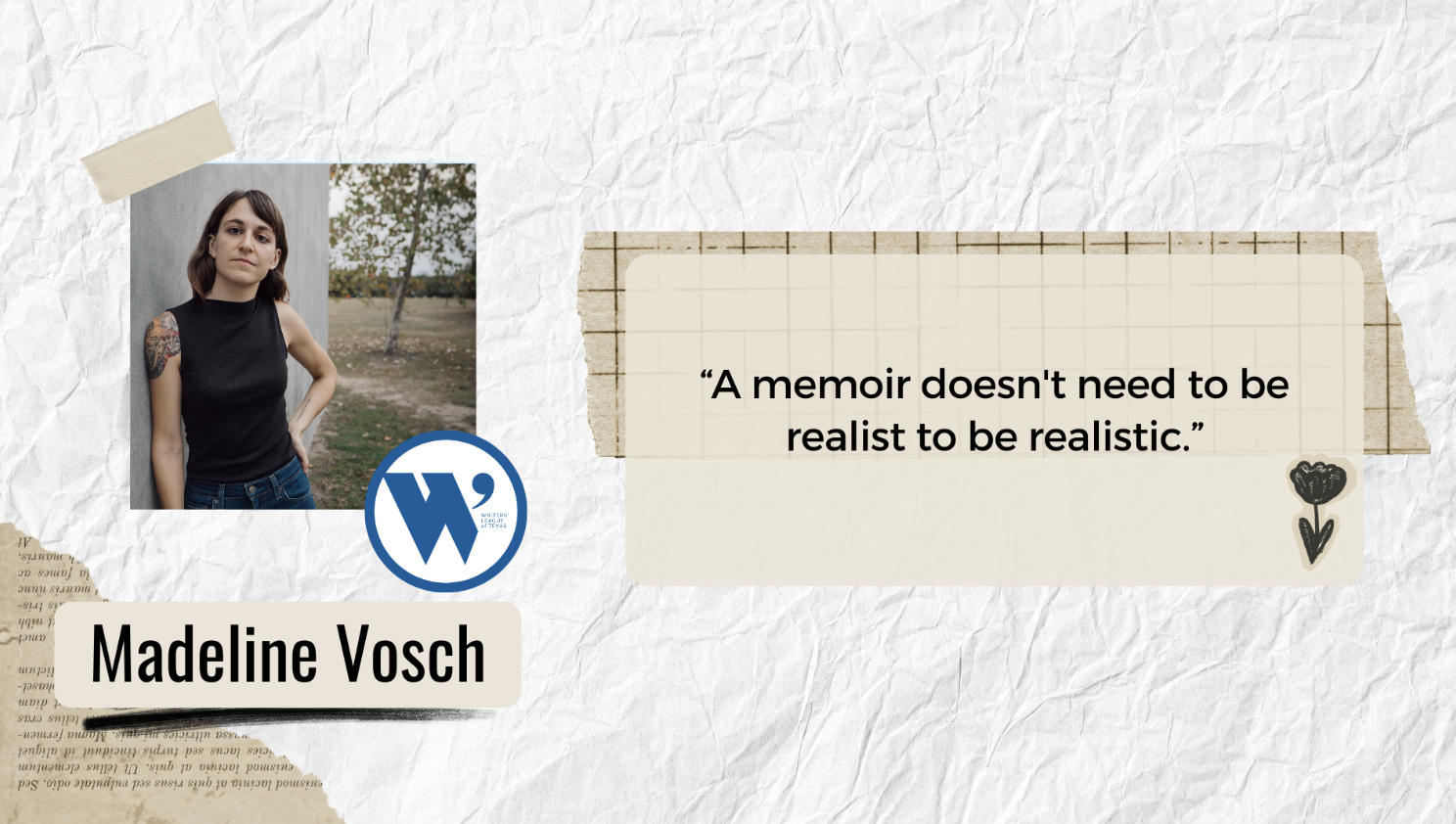
“Self-Representation in Memoir: Tools to Create Yourself”
This class will examine how, as memoirists, we are both a voice and a character within the text.
As we cannot include every tiny detail about ourselves in our memoirs, we give our readers a snapshot of who we are, making ourselves into a character on the page. We get to choose which parts of ourselves are included in the narrative, and these details change who we are in the text. In this class, we will look at examples of memoir and auto-fiction, asking how the texts differ in self-representation. We will discuss how we construct ourselves in the stories that we tell, think through questions of self-representation, and practice writing ourselves as characters.


Reading Class
Virtual, July 2023
This course approaches class as something that appears throughout texts, not just in relation to where a character works or the material conditions of their lives. Class, intertwined with race, sex, and gender, affects how characters and narrators relate to and describe the world, each other, themselves.
We will read a variety of texts, asking how each work approaches and depicts class, how class status affects characters, and what assumptions we bring to the text.

Reading Soviet Novels in Translation
Virtual, every other Thursday, February 3, 2022 - March 31, 2022
In this course, taught through Catapult, we will read four early Soviet novels. We will look closely at how each of the novels construct the worlds of the text, with particular attention to estrangement on the level of the sentence. From the apocalyptic mire of The Foundation Pit, to the rhetorical leaps of Shklovsky’s longing in Zoo, we will study how these authors twist and distort language, and ask what we as writers can learn from them.
In addition, Madeline has taught a wide array of college courses, including: Freshman Composition, Introduction to Creative Writing, Poetry Writing, survey courses on ancient and contemporary world literature, Introduction to Humanities, and Introduction to Comparative Religion.